“Murder capital of Europe” down 56%

Between 2003-2005, the city Glasgow had the highest murder rate of any in Europe. The United Nations declared Scotland the most violent country in the developed world, with Scots almost three times as likely to be assaulted as Americans. Newspapers were routinely filled with reports of gruesome murders and bloody gang fights.

Over the following decade, the homicide rate would fall by 56% in Glasgow and 38% in Scotland more widely….

How did a nation once beleaguered by knives, gangs and slayings make such a decisive change?

In short, it changed the way it saw violence as a problem – shifting it from being solely a criminal justice issue to one that was also about public health.

A project to reduce violence in Chicago led to a project to reduce violence in Cincinnati, which was adapted for local use. Doctors started referring violence victims to sources of help (including dentists, who informed patients while they were still in the dentist’s chair), schools excluded far fewer students, peer support groups were organized, and a Violence Reduction Unit was created in the police department.

2,400 words: https://www.bbc.com/future/article/20260626-how-scotland-changed-the-way-it-tackled-violence.

Good news from Fix the News:

Malaria prevalence in Zanzibar has fallen from 40% in mid-2001 to 0.04% today. AI-guided drones are now mapping standing water in a few hours, a process that used to take health teams days. Once identified, these mosquito breeding habitats are mapped by GPS and targeted for immediate treatment with insecticide. Thus far, there have been no malaria deaths in Zanzibar in 2026, and the island is on the brink of eliminating the disease entirely. Streamline Feed

And on the funny side… You may remember a song Hocus Pocus from a band called Focus, way back in 1971. Genius.com describes it thus: “An iconic and unusual song, “Hocus Pocus” consists of a guitar riff, broken up by varied interludes of yodeling, organs, accordions, and even more.” I was particularly taken by the lyrics:

[Interlude 1]
Ôi orôrôi rôrôrôi rôrôrôi rôrôrôi rôrôrôi ohrorô poPÔ
Yôi orôrôi rôrôrôi rôrôrôi rôrôrôi rôrôrôi ohrorô
PoPÔ
Aaaah aaah aaah aaah
Uuuh oooh oooh ooooooooh

[Interlude 2]
Ôi orôrôi rôrôrôi rôrôrôi rôrôrôi rôrôrôi ohrorô poPÔ
Yôi orôrôi rôrôrôi rôrôrôi rôrôrôi rôrôrôi ohrorô
BoumPÔ
Aaaah aaah aaah aaah
Uuuh oooh oooh ooooooooh

…etc. Click here to listen to the song on YouTube, 6 minutes 42 seconds.

What Happened to al-Qaeda?

Twenty-five years after 9/11, analysts can’t decide if the terrorist organization is all but defunct or more threatening than ever…

The group yearned to attack America again after 9/11 and had considered several schemes, but only on three occasions before Pensacola had it actually tried to execute an operation. All three plots had failed. ((Pensacola: “On December 6, 2019, in Pensacola, Florida, a 21-year-old Royal Saudi Air Force officer took out a legally acquired Glock pistol and killed three U.S. sailors at a naval air base.”))

A 2021 Brown University report put the cost of the War on Terror at more than $8 trillion. This unfathomable investment succeeded in removing al‑Qaeda from the little camps it once controlled in Afghanistan. But these havens have been replaced by large ones elsewhere, including in parts of the Horn of Africa, Yemen, and the Sahel, the arid region of West Africa just south of the Sahara. The al‑Qaeda franchises in those places are ruthless and rich. The East African branch fields a force that has been estimated at 10,000 men and pulls in about $100 million in revenue annually through taxation, smuggling, and outright theft.

On the other hand, these franchises are not attacking the US.

Bin Laden left 6,000 pages of notes about his actions and plans, and apparently believed that the 9/11 attacks would make the US completely withdraw from the Middle East:

For good or ill, American Middle East policy during this period was roughly the opposite of what bin Laden expected and intended. Rather than withdrawing, U.S. forces surged into the region. The United States has troops, and friends, in Syria, Bahrain, Iraq, Jordan, Saudi Arabia, Kuwait, Qatar, and the United Arab Emirates… Privately, bin Laden bemoaned his network’s impotence, lack of money, and inability to mount even small operations.

By now the rhythm of terrorism analysis should be familiar: For every piece of evidence that makes al‑Qaeda’s leaders look like evil geniuses, there is counterevidence that makes them look like hopeless bumblers.

It’s complicated, and even the experts hesitate to make predictions. 6,700 words: https://www.theatlantic.com/magazine/2026/09/al-qaeda-25-years-post-9-11/687965/. If this is paywalled, send me a note.

Good news from Fix the News:

Türkiye votes in favour of amnesty to end its 40-year war. On Monday this week, Türkiye’s Parliament passed a law (with almost 80% support) offering conditional amnesty offering conditional pardons and legal protections to thousands of rank-and-file members of the Kurdistan Workers’ Party, in return for full disarmament. This builds on the ceasefire that saw the group lay down its arms last year. The insurgency, one of the world’s longest, has killed tens of thousands across Turkey, Iraq and Syria since 1984. Bloomberg / WSWS

And an image from my collection:

Pirates vs metric system

In 1793, the brand new United States of America needed a standard measuring system because the states were using a hodgepodge of systems.

“For example, in New York, they were using Dutch systems, and in New England, they were using English systems,” says Keith Martin, of the research library at the National Institute of Standards and Technology.

This made interstate commerce difficult.

Briefly, Thomas Jefferson asked his friends in France for help. They sent a scientist with a one-kilogram standard weight to the new USA… but his ship was blown to the Caribbean by a storm, and was then captured by pirates…

https://www.npr.org/sections/thetwo-way/2017/12/28/574044232/how-pirates-of-the-caribbean-hijacked-americas-metric-system. 725 words.

Good news from Fix the News:

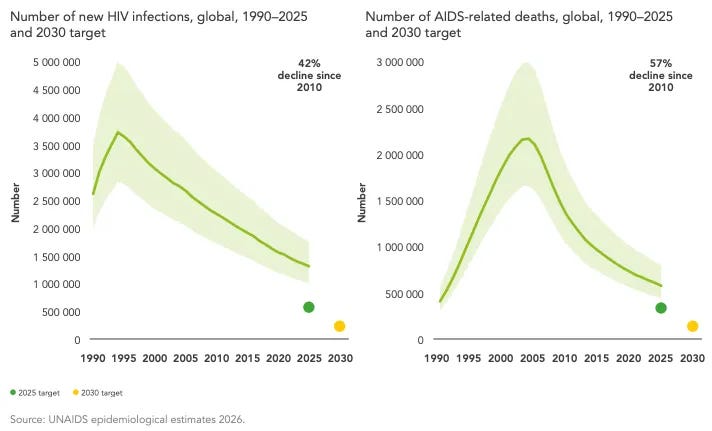
HIV infections and AIDS deaths down to their lowest level in 30 years. UNAIDS counted 1.2 million new infections last year, down from a peak of 3.3 million in the 1990s. There were an estimated 570,000 deaths in 2025, down from roughly 2.1 million in 2004. New forms of prevention are coming – lenacapavir gives people almost perfect protection, and researchers believe mRNA is close to delivering a working HIV vaccine. Everyone is worried about money though: international funding fell 18% last year. UNAIDS / Vox

And an image from my collection: